


What is Kube AI Hub
Overview
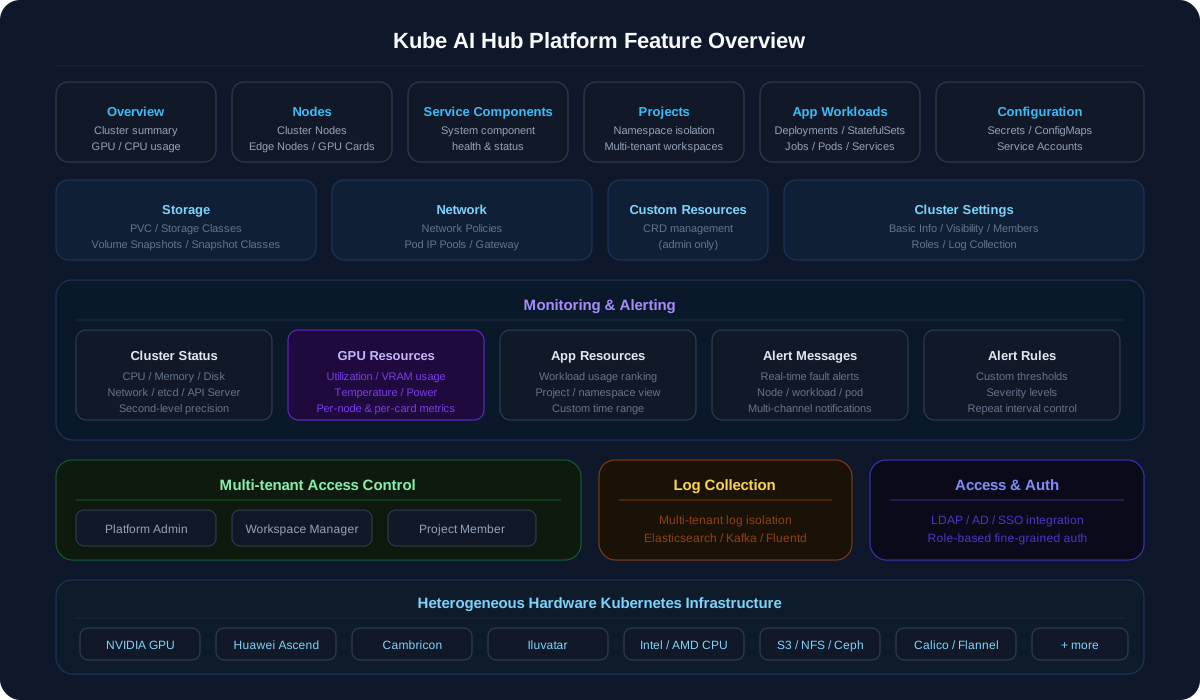
Kube AI Hub is a heterogeneous compute management platform built on Kubernetes, focusing on GPU/CPU resource pooling, vGPU virtualization, multi-tenant isolation, intelligent scheduling, and full-stack observability. Through a unified web console, Kube AI Hub manages multiple heterogeneous hardware clusters, helping enterprises improve compute utilization by 3–10x and build a secure, self-controlled AI compute infrastructure.
Core Design Goals
- Unified heterogeneous compute management: Supports NVIDIA, Huawei Ascend, Cambricon, Iluvatar, and other mainstream GPUs, as well as Intel, AMD, and Hygon CPUs — all managed through a single control plane.
- vGPU virtualization: Fine-grained GPU slicing and sharing across concurrent workloads, significantly improving hardware utilization.
- Multi-tenant isolation: Three-tier permission system across platform, workspace, and project — resources and data are fully isolated between tenants.
- Full-stack observability: Second-level GPU/CPU monitoring, alerting, and log management with support for multiple notification channels.
- Modular and pluggable: All feature modules can be enabled on demand; supports flexible integration with third-party schedulers and storage systems.
Who Is It For
Kube AI Hub delivers differentiated value to three types of teams:
Infrastructure Teams: Centrally manage heterogeneous GPU/CPU clusters. Resource pooling and vGPU virtualization reduce hardware costs and increase overall utilization.
AI Engineers: Submit AI training and inference jobs through the web console without writing complex Kubernetes manifests. Supports distributed training with PyTorch, TensorFlow, and other major frameworks.
Operations and Business Teams: Multi-dimensional monitoring and alerting, centralized log search, and metering/billing reports enable fine-grained compute cost management and IT budget planning.
Supported Deployment Environments
Kube AI Hub is built on standard Kubernetes with no invasive modifications to the underlying infrastructure. It can be deployed on any version-compatible Kubernetes cluster, including:
- Bare metal servers
- Private cloud and data center virtual machines
- Managed Kubernetes on Alibaba Cloud, AWS, Huawei Cloud, Tencent Cloud, and more
- Hybrid cloud and cross-datacenter environments
Both online and air-gapped installation are supported, with one-click node scaling and rolling upgrades.
For more information, see Installing on Linux and Installing on Kubernetes.
